
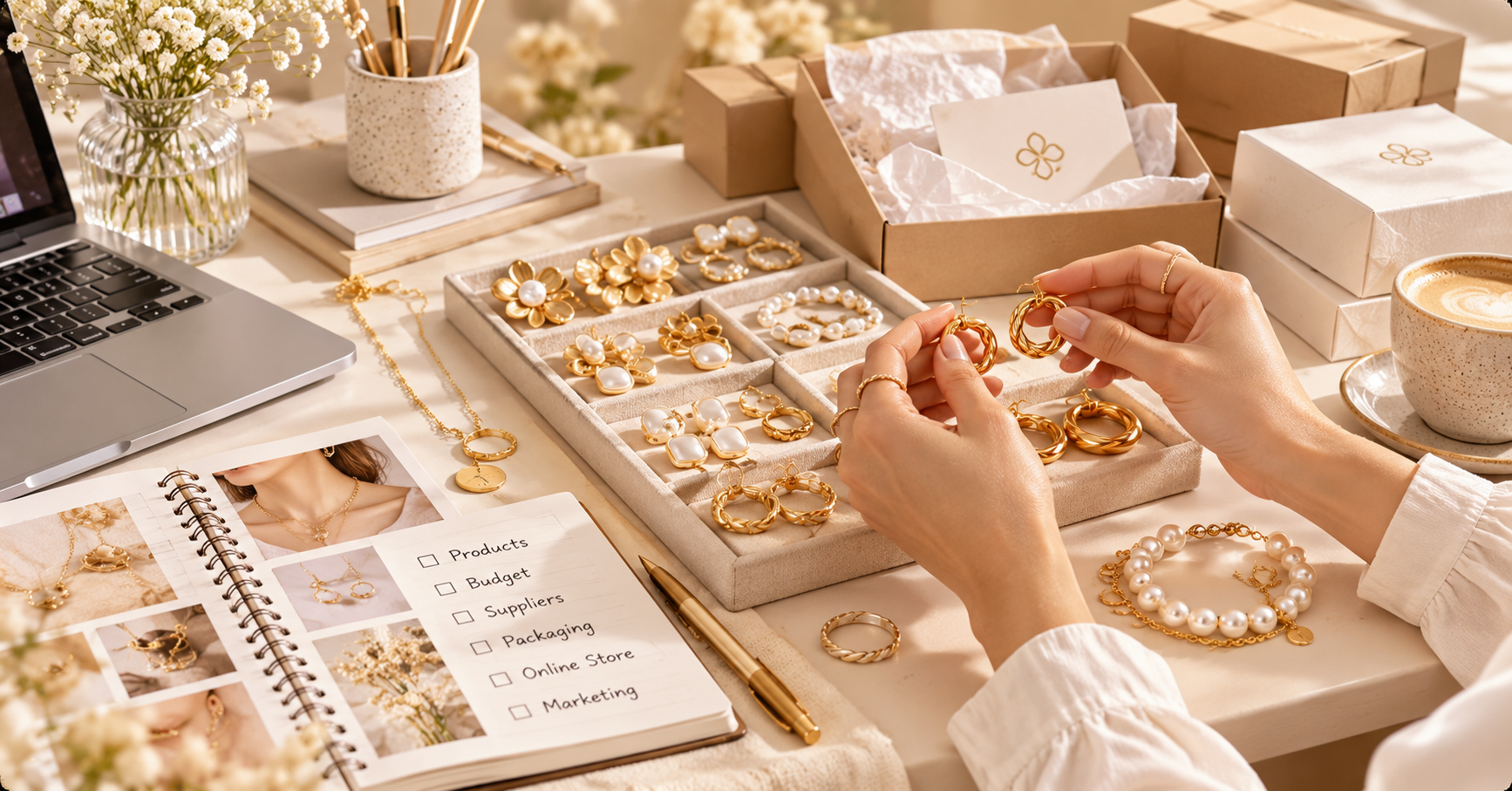
How to Start a Jewelry Business with a Small Budget
Dreaming of starting your own jewelry business?
You don’t necessarily need a large inventory or an expensive storefront to begin exploring your business idea.
With thoughtful planning, a focused product selection, and a clear understanding of your costs, you can start small and build your jewelry business step by step.
Whether you’re interested in opening an online boutique, selling fashion accessories through social media, or adding jewelry to an existing store, this guide will help you understand the essentials.
1. Choose Your Jewelry Business Style
Before purchasing products, decide what kind of jewelry business you want to create.
Some popular options include:
Online Jewelry Boutique
Sell jewelry through your own website or an online marketplace.
Social Media Jewelry Store
Use social platforms to showcase products, share styling ideas, and connect with potential customers.
Fashion Accessories Boutique
Offer jewelry alongside clothing, handbags, and other accessories.
Gift-Focused Jewelry Shop
Create collections featuring decorative earrings, necklaces, bracelets, and rings suitable for gifting.
Choose a direction that fits your interests, budget, and target customers.
2. Define Your Target Customer
A clear target customer makes product selection easier.
Ask yourself:
- Who is most likely to purchase my jewelry?
- What price range can they comfortably afford?
- Do they prefer minimalist or statement designs?
- Are they shopping for everyday accessories or special occasions?
- Where do they usually discover new jewelry?
For example, customers looking for everyday fashion accessories may prefer versatile earrings and delicate necklaces.
Customers who enjoy expressive styling may be more interested in bold metallic designs, floral earrings, and decorative rings.
Understanding these preferences will help you create a more focused collection.
3. Start with a Small Product Selection
When launching a new jewelry business, it’s tempting to purchase many different styles.
However, a smaller initial collection can be easier to photograph, organize, promote, and evaluate.
Consider starting with a selection such as:
- 6 earring designs
- 4 necklace designs
- 3 ring designs
- 2 bracelet designs
This is only an example. Your actual selection should depend on your budget and supplier requirements.
Choose pieces that complement one another and reflect your brand’s style.
Once you begin receiving customer feedback, you can expand your assortment based on demand.
4. Find a Fashion Jewelry Supplier
Your supplier plays an important role in your business.
Look for clear product descriptions, transparent pricing, and styles that fit your customers.
Before placing an order, review:
- Materials and product details
- Available colors and designs
- Sample purchasing options
- Wholesale pricing
- Shipping information
- Order requirements
If you’re unfamiliar with a product, consider evaluating a sample before purchasing a larger quantity.
At AVIGJEWELRY, we offer a selection of fashion jewelry styles for shoppers and business buyers.
Explore our collections to discover earrings, necklaces, bracelets, and rings for your store.
5. Create a Simple Startup Budget
Starting with a small budget doesn’t mean ignoring expenses.
Let’s imagine you have a starting budget of $300.
One possible allocation might be:
|
Expense |
Example Budget |
|---|---|
|
Initial jewelry inventory |
$150 |
|
Shipping and packaging |
$60 |
|
Product photography and content |
$30 |
|
Marketing and testing |
$40 |
|
Contingency |
$20 |
|
Total |
$300 |
This is an illustrative budget, not a guarantee that every business can launch for $300.
Actual costs depend on your location, supplier, sales platform, shipping method, and business requirements.
If you already have a phone suitable for product photography, you may be able to create your first marketing materials without purchasing expensive equipment.
6. Price Your Jewelry Carefully
Pricing is one of the most important parts of running a jewelry business.
Your retail price needs to cover more than the wholesale cost.
Consider:
- Product cost
- Shipping
- Packaging
- Payment processing
- Marketing
- Platform fees
- Taxes
- Returns and other operating expenses
For example, if a jewelry item costs $4 and you sell it for $16, the difference is $12 before additional expenses.
That difference is not your final net profit.
Calculate your expected costs before deciding on your selling price.
A sustainable pricing strategy should balance customer expectations with your business expenses.
7. Create Attractive Product Photography
Jewelry is a visual product.
Clear photographs can help shoppers understand its appearance and design.
You don’t necessarily need professional studio equipment to begin.
Try capturing:
- A clear product photo
- A close-up of decorative details
- A photo showing how the jewelry looks when worn
- A styled image with clothing or accessories
Natural light and a clean background can make a big difference.
Avoid editing images so heavily that the product’s appearance becomes misleading.
8. Build Your Online Presence
Once you’ve selected your products, think about where customers will discover them.
Depending on your market, you might consider:
- Your own online store
- TikTok
- Online marketplaces
Use your content to show more than product prices.
Share styling ideas, product details, collection inspiration, and helpful information.
A consistent visual identity can help customers recognize your brand over time.
9. Focus on Customer Trust
Trust matters when selling jewelry online.
Before launching, make sure customers can easily find:
- Product descriptions
- Pricing
- Shipping information
- Return and refund policies
- Contact details
- Secure checkout options
Be transparent about materials and avoid making unsupported claims about product quality or durability.
Clear information helps customers make more confident purchasing decisions.
10. Learn, Improve, and Grow
Your first jewelry collection doesn’t need to be perfect.
The goal is to learn what customers respond to.
Pay attention to:
- Which products receive the most interest
- Which styles generate sales
- Customer questions
- Product feedback
- Your actual profit after expenses
Use this information to improve your product selection and purchasing decisions.
A successful jewelry business is built through testing, learning, and consistent improvement.
Start Exploring Jewelry for Your Business
At AVIGJEWELRY, we believe starting a jewelry collection should feel exciting rather than complicated.
Our fashion jewelry assortment includes earrings, necklaces, bracelets, and rings in a range of styles.
Whether you’re preparing to launch a boutique, exploring new products for an existing business, or purchasing jewelry for yourself, we invite you to discover our collections.
Ready to take the next step?
Browse AVIGJEWELRY, explore new arrivals, and contact us if you’d like to discuss wholesale purchasing.
Start Your Jewelry Journey with AVIGJEWELRY.